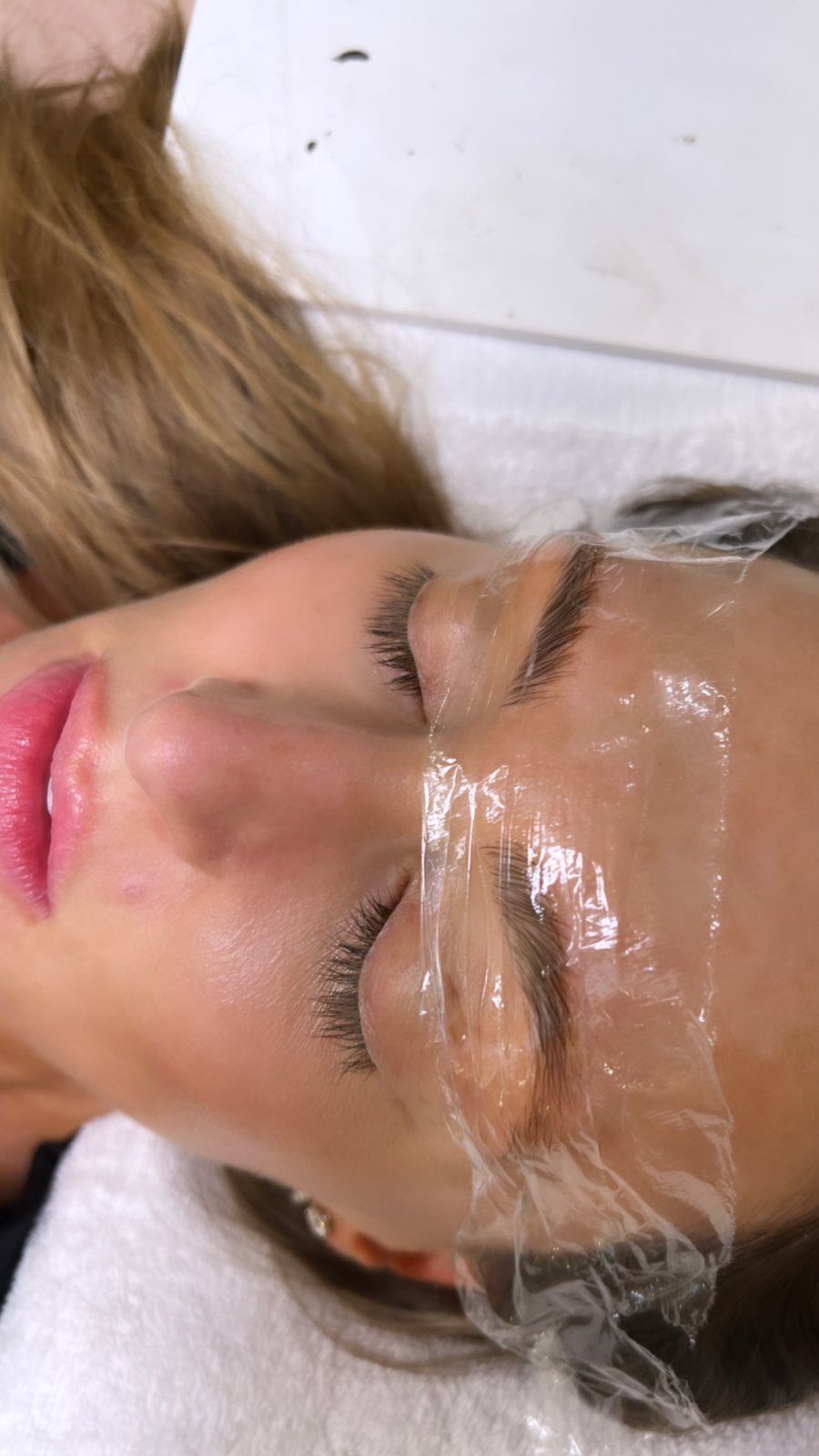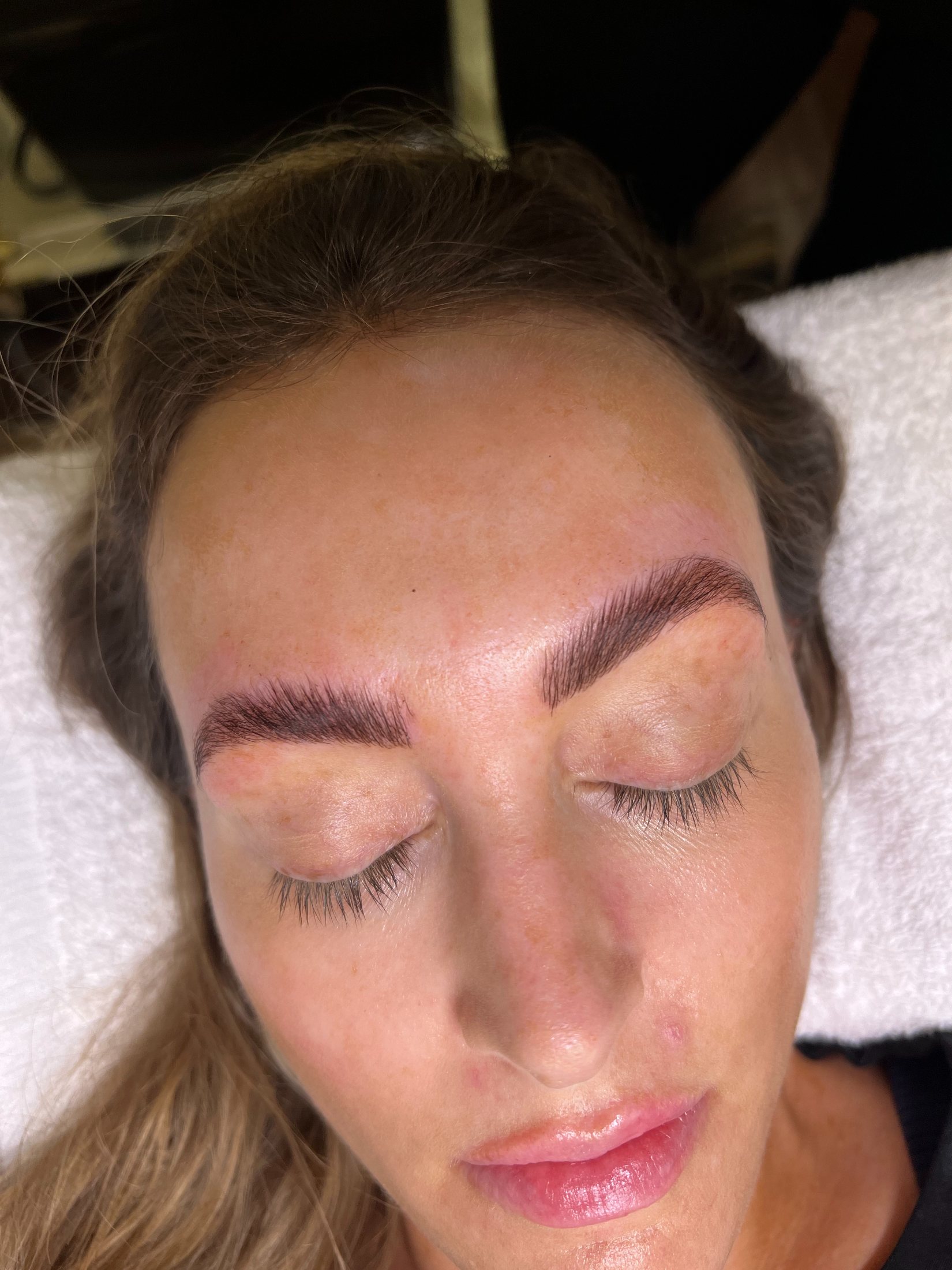
They look like similar solutions sitting in the same beauty aisle. They're not. Brow lamination and microblading solve fundamentally different brow problems — and clients who confuse them end up overspending, overcommitting, or undoing the wrong service to chase the right one.
Brow lamination styles existing hair upward into a lifted shape. Microblading creates the appearance of hair where there isn't any. If your brows are sparse-shaped — meaning you have hairs, they just go in unhelpful directions — lamination is your answer. If your brows are sparse-density — meaning you have very few hairs, period — microblading is the conversation. Mixing these up is the most expensive brow mistake clients make.
We offer The Total Brow at The Bronze Lily. We don't offer microblading. So this article isn't a pitch for one of our services over a competitor's — it's the honest comparison I give every client who comes in confused about which one they actually need.
What brow lamination actually does
Brow lamination is a chemical process — closer in spirit to a perm than a tint. A cysteamine hydrochloride solution breaks the disulfide bonds inside each brow hair, temporarily softening the hair shaft. While the hair is soft, we brush it upward into the shape we want. A neutralizer then rebuilds the bonds in the new direction. The result holds for 8 to 12 weeks before the hair softens back to its natural growth pattern.
At The Bronze Lily, lamination doesn't come as a standalone service — it's part of The Total Brow ($90), which bundles lamination plus tint plus wax plus shape into one appointment. The tint deepens the laminated hairs (and is especially powerful on gray brow hair, where the lamination opens the follicle enough for the tint to actually hold). The wax and shape land the final silhouette. Done together, it's one of the most transformative 45-minute services in the studio.
What microblading actually does
Microblading is semi-permanent makeup. A tiny manual blade — a row of needles arranged in a curve — deposits pigment into the upper layer of the skin in tight strokes designed to mimic individual hairs. Done well, it looks remarkably like real brow hair growing where there isn't any. Done poorly, it looks like a permanent marker accident.
Microblading holds 1 to 3 years before fading. The initial appointment takes 2 to 3 hours and requires a 6-to-8-week touch-up appointment to fill in any areas the skin rejected during healing. After that, most clients touch up annually.
Side by side: cost, time, commitment, healing
The actual decision usually comes down to four factors. Here's how they stack up:
- Cost over a year. Lamination: $90 × 4 to 6 sessions = $360 to $540 per year. Microblading: $400 to $800 upfront plus a $200 to $400 annual touch-up = roughly similar over 2 to 3 years.
- Session time. Lamination: about 45 minutes. Microblading: 2 to 3 hours initial, plus a 6-to-8-week touch-up.
- Healing time. Lamination: zero downtime, walk out and go to lunch. Microblading: 7 to 10 days of visible scabbing, plus 4 to 6 weeks before the color fully settles.
- Pain. Lamination: none — it's a topical chemical process. Microblading: mild to moderate (numbing cream is used but the sensation is real).
- Reversibility. Lamination: grows out completely in 8 to 12 weeks. Microblading: semi-permanent, hard to remove, expensive to correct if you regret the shape.
If your brows are sparse-shaped, lamination. If your brows are sparse-density, microblading. Mixing these up is the most expensive brow mistake clients make.
Who lamination is right for
I recommend lamination when a client's actual problem is shape, not density:
- Brows with healthy density but unruly growth pattern
- Downward-pointing or sideways-growing hairs that want to be brushed up
- "Fuller-looking" brows desired without adding any actual hair
- Gray hairs — lamination opens the follicle so the tint can actually hold (regular brow tint barely takes on gray)
- Low commitment — anyone who wants the freedom to change their mind in 8 to 12 weeks
- Lower budget — $90 every couple months versus $600+ upfront
If your brows look great brushed up with a spoolie and you'd just like them to stay that way without daily styling, lamination is your service.
Who microblading is right for (and when to consider it instead)
Microblading is the answer when actual hair is missing:
- Genuinely sparse density — over-plucked from the 90s, alopecia, chemotherapy regrowth, or naturally thin brows
- Missing brow tails (the most common case)
- A full rebuild where the brow has to be drawn rather than shaped
- Someone who doesn't want to spend any time on brow styling, ever
One serious caveat: pick your microblading artist very carefully. The procedure is permanent enough that bad work is hard to fix and expensive to remove. Look at healed work — not freshly-done work, healed work — from at least 3 to 5 of the artist's past clients. If they can't show you that, don't book.
Our recommendation: try lamination first
If you're on the fence, do The Total Brow first. Three reasons.
One: it's cheaper. $90 versus $400+. If lamination gives you enough lift and fullness, you've saved hundreds.
Two: zero healing. No scabbing, no aftercare protocol, no 6-week wait to see your real result. You see the final look the moment you walk out.
Three: fully reversible. If you hate the shape we landed on, it's gone in 8 to 12 weeks. Try it. Live with it. Then — if you still feel like your brows need actual hair built where there isn't any — book the microblading consultation with someone you've vetted carefully.
The brows I've seen go wrong over 14 years all started the same way: someone confused two services that look similar from the outside but solve different problems on the inside. Lamination shapes what's there. Microblading builds what isn't. Know which problem you have before you book either one.