More and more men come to us with a version of the same sentence: "My hair transplant doctor told me I need to exfoliate my scalp — can you do that?" The answer is yes, we can — but the more useful answer is when, because the same word ("exfoliate") means three completely different things depending on where you are in the process. Get the timing right and you protect your investment. Get it wrong and you can literally undo the surgery.
A hair transplant is a real surgical investment — often several thousand dollars and a year of patience waiting for full results. The scalp it's performed on is an organ that needs to be healthy before, protected during, and maintained after. Think of it in three windows.
Window 1 — Before surgery: a clean, healthy canvas
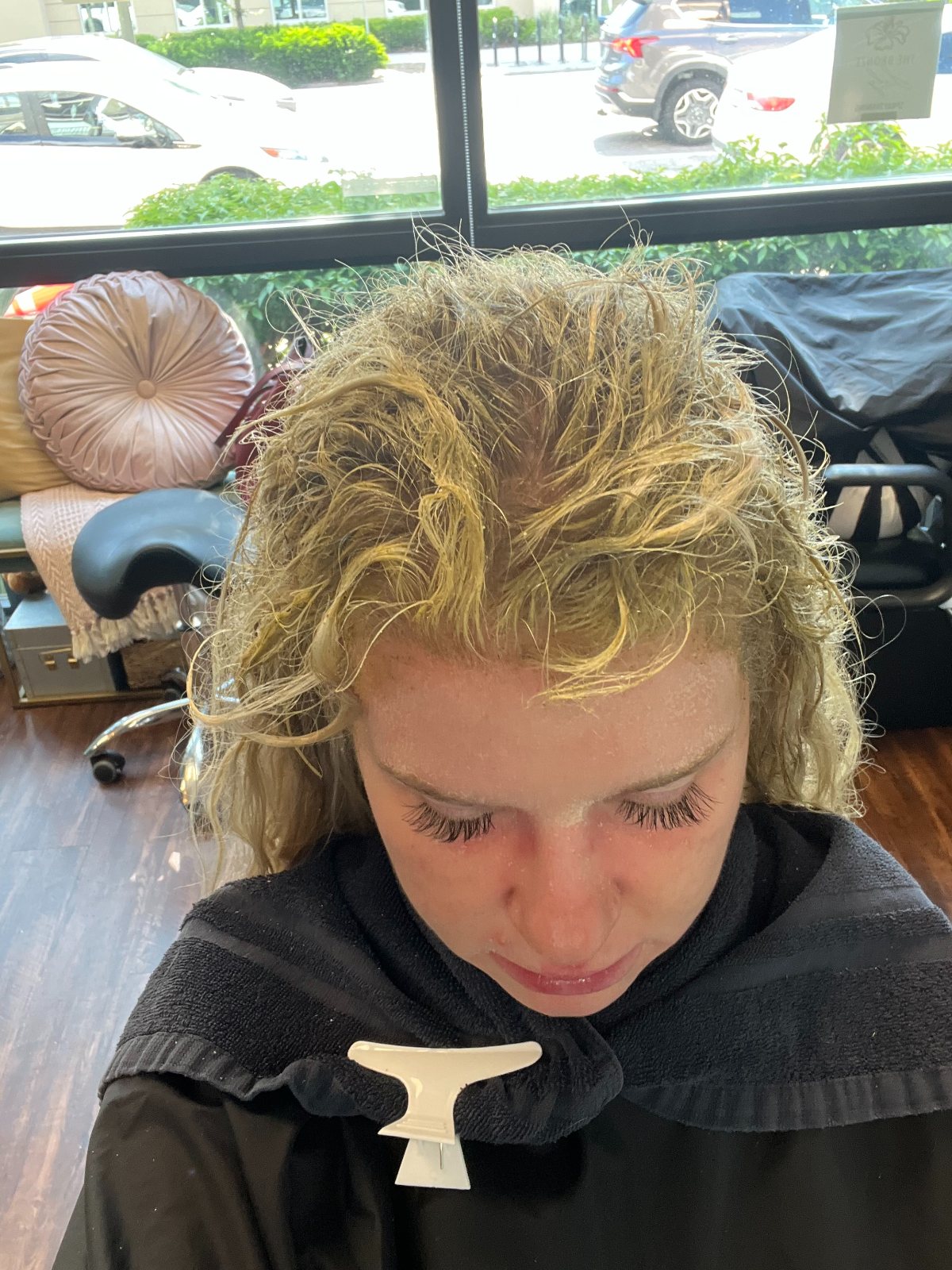
Surgeons want to operate on a healthy scalp. Buildup, excess oil, flaking, and an unbalanced scalp environment aren't ideal starting conditions. That's why a professional scalp detox in the weeks leading up to your procedure can genuinely help — clearing product and sebum buildup, calming flaking, and getting the skin into its best condition before the grafts go in.
The crucial caveat: most surgeons ask you to stop harsh or manual exfoliation in roughly the final week before surgery, and many prescribe a medicated cleansing shampoo for those last days instead. So the smart move is to do your deeper scalp-health work in the weeks ahead of that final stretch — not right before. Your surgeon's pre-op sheet is the final word on exact timing.
The word "exfoliate" means three different things before, during, and after a transplant. The danger is doing the wrong one at the wrong time.
Window 2 — The healing weeks: hands completely off
This is the part we are most careful about, and the part the internet most often gets dangerously wrong. For roughly the first two weeks after a hair transplant, you must never manually exfoliate, scrub, or massage the grafts. The newly placed follicles are fragile and can be dislodged by friction — which is exactly what scrubbing is.
During this window, the only "exfoliation" that should happen is natural: the small scabs and crusts around each graft shed on their own through the gentle washing routine your surgeon prescribes. Around days 10 to 14, many surgeons allow very light fingertip pressure during washing to help softened scabs flake away — but that is their call, on their timeline, not a salon's. No professional scalp treatment belongs anywhere near this window. If a spa offers you one, leave.
The first two weeks are a hands-off, surgeon-only window.
Window 3 — After you're healed: scalp detox, done right
Once your surgeon confirms you are fully healed — typically several weeks or more after surgery, depending on your healing — the picture changes completely. Now scalp care becomes about maintaining the investment: keeping follicles clear of buildup, supporting circulation, managing the dryness and flaking that can follow healing, and giving both the transplanted and the existing hair the healthiest possible environment to grow in.
This is the window a professional scalp detox was made for. Gentle, thorough exfoliation of the skin (not the hair), deep cleansing, hydration, and massage — the same scalp-health fundamentals, now applied to support long-term results. The key word is still gentle, and the prerequisite is still your surgeon's clearance.
Where a head spa fits — and where it doesn't
Here's how we work with hair transplant clients at The Bronze Lily, plainly:
- Before your procedure — our Relax & Detox ($120): a scalp-detox head spa in the weeks leading up gets your scalp into its healthiest condition — buildup cleared, flaking calmed, skin balanced — then you follow your surgeon's final-week prep instructions.
- During healing: nothing. We will not book or perform any scalp treatment while you are healing. This is a firm line, for your safety and your results.
- After clearance — our Hair Growth Activation ($175): once your surgeon gives the go-ahead, this 90-minute treatment uses follicle-focused stimulation and bioactive masks to support the health of your new and existing hair — and the Tricho-Analyzer tracks your scalp density before and after every visit, so you can actually see the environment improving over the months your transplant is filling in.
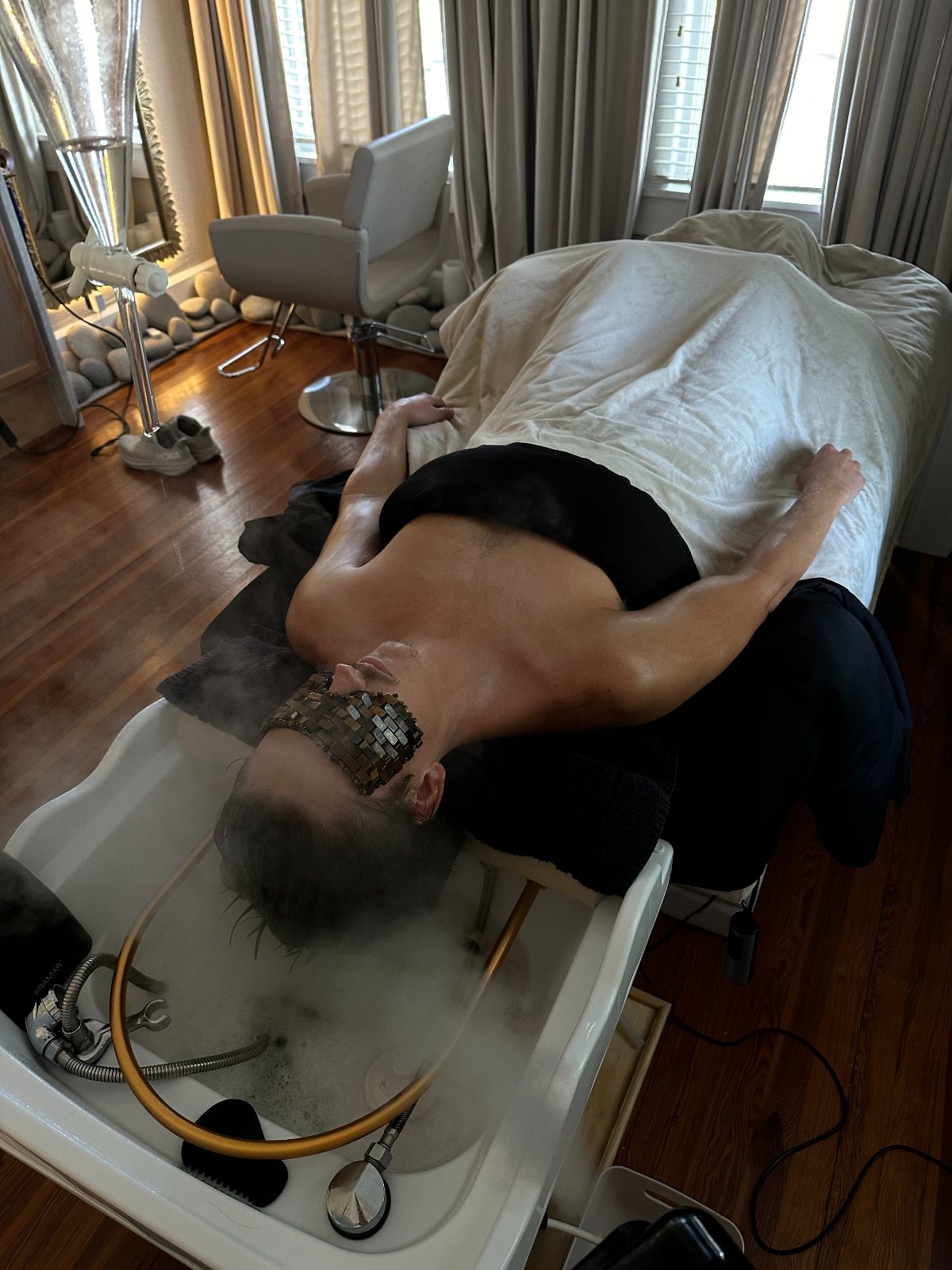
Our head spa begins with a Tricho-Analyzer scalp diagnostic so we can see exactly what your scalp needs, followed by deep cleansing, halo hydrotherapy, and scalp massage — all calibrated to be gentle. It's the same program founder Larae built out of her own long scalp-healing journey, which is why "gentle and non-stripping" isn't marketing here; it's the whole philosophy. (That story is here.)
If you're researching a transplant in the Tampa Bay area
St. Petersburg, Clearwater, and Tampa are home to a number of experienced hair restoration surgeons, and most modern clinics use FUE techniques. Whichever surgeon you choose, the scalp-care principles are the same: arrive with a healthy scalp, protect it completely while it heals, and maintain it once you're cleared. We're happy to be the scalp-wellness half of that equation — before and after, on your surgeon's timeline.
If you've had your procedure and your surgeon has cleared you, bring that clearance and we'll build your scalp-detox cadence around it. If you're still in the planning stage, a pre-op scalp detox is one of the easiest ways to start the whole process from a stronger position.
This article is general wellness information and not medical advice. Hair transplant surgery and aftercare must be directed by your qualified surgeon; always follow their specific pre-operative and post-operative instructions. The Bronze Lily provides scalp-wellness services and does not perform or replace medical hair restoration.