The short answer
The chakras are a seven-point map from yogic tradition — energy centers running from the base of the spine (the Root) to the top of the head (the Crown). It is a spiritual framework, not anatomy, and it works best as a lens for noticing where you feel stuck. Our foot-soak suite is called the Root Room on purpose: the Root chakra sits at the base, governs grounding and safety, and is the one you settle first. Here is the full map, plus the tones traditionally paired with each. See the Root Room →
Think of the chakras less as machinery to fix and more as a vocabulary — a way to name where the tension lives before you try to loosen it.
Chakra means “wheel” in Sanskrit. In yogic tradition, seven of them run in a line along the spine, each associated with a region of the body, a set of emotional themes, a color, and — in the modern sound-and-frequency world — a tone. Before we walk through all seven, one honest framing: this is a spiritual and energetic model, centuries old and genuinely useful as a way to reflect, but it is not a medical diagnosis. If a part of the list below maps to a real physical symptom you are having, that is a cue to see a doctor, not to reach for a frequency. With that said, it is a beautiful map — and it starts, fittingly for us, at the root.
The seven, root to crown
Each center below lists where it sits, what people traditionally notice when it feels “off,” and the tone often paired with it in sound work. Read the tones as intention-setting — a way to point your attention — not as prescriptions.
- Root — base of the spine. Grounding, safety, belonging. When it feels off: insecurity, anxiety, low vitality, excessive fear, over-attachment to material things. Traditionally paired tone: 396 Hz. Color: red.
- Sacral — a couple of inches below the navel. Creativity, pleasure, emotion, relationships. When it feels off: emotional ups and downs, blocked creativity, shifts in libido, relationship strain, hip tension. Traditionally paired tone: 417 Hz. Color: orange.
- Solar Plexus — upper abdomen, between navel and breastbone. Confidence, willpower, personal power. When it feels off: low self-esteem, a need to over-control, digestive upset, anger, anxiety. Traditionally paired tone: 528 Hz. Color: yellow.
- Heart — center of the chest. Love, compassion, forgiveness. When it feels off: heartbreak, resentment, difficulty forgiving others or yourself. Traditionally paired tone: 639 Hz. Color: green.
- Throat — the throat. Expression, truth, voice. When it feels off: trouble expressing yourself, fear of speaking honestly. Traditionally paired tone: 741 Hz. Color: blue.
- Third Eye — center of the forehead, between the brows. Insight, intuition, focus. When it feels off: cloudy judgment, trouble concentrating, restless dreams. Traditionally paired tone: 852 Hz. Color: indigo.
- Crown — top of the head. Perspective, connection, meaning. When it feels off: feeling adrift, isolated, or without direction. Traditionally paired tone: 963 Hz. Color: violet.
Why we started at the Root
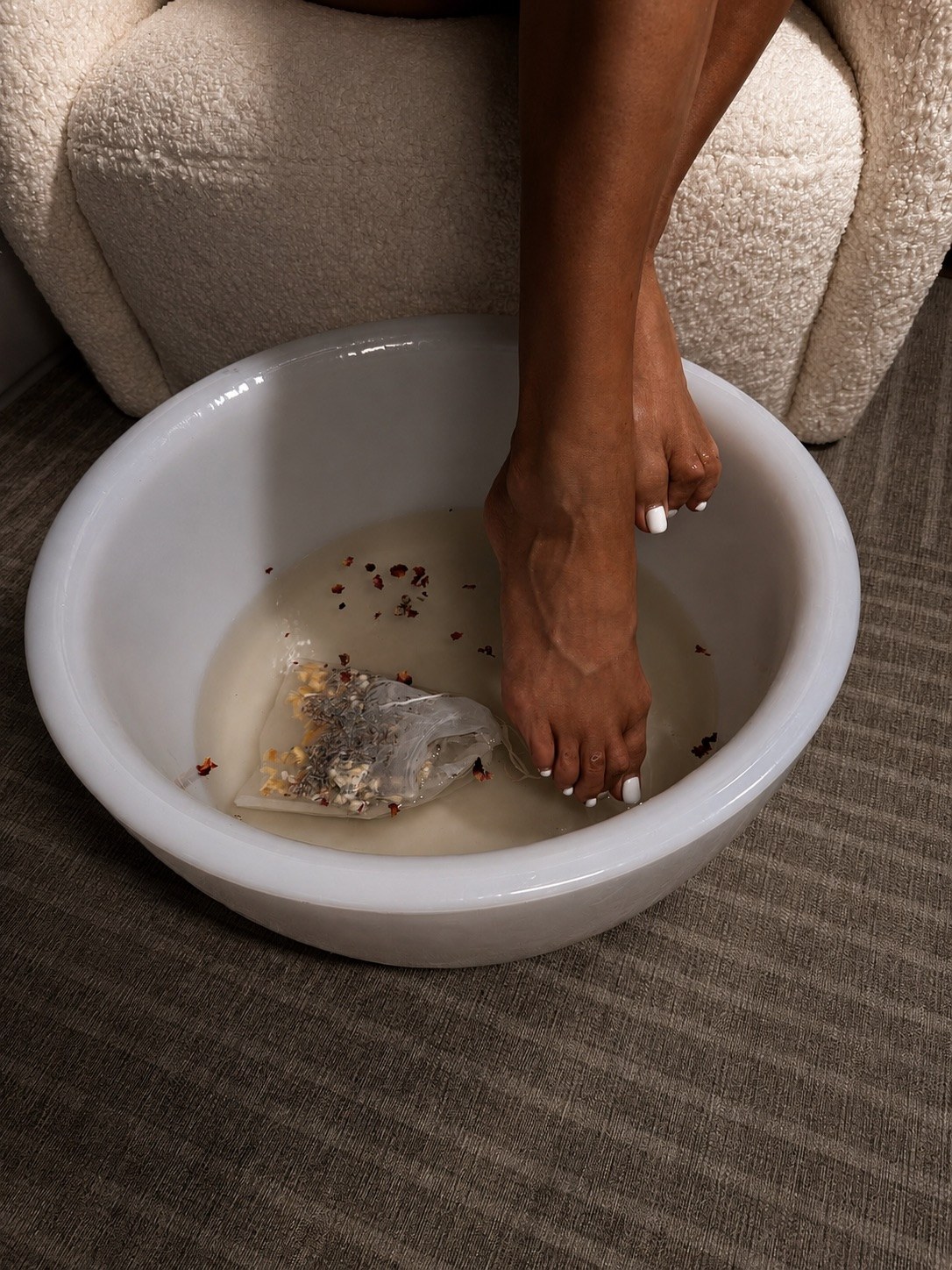
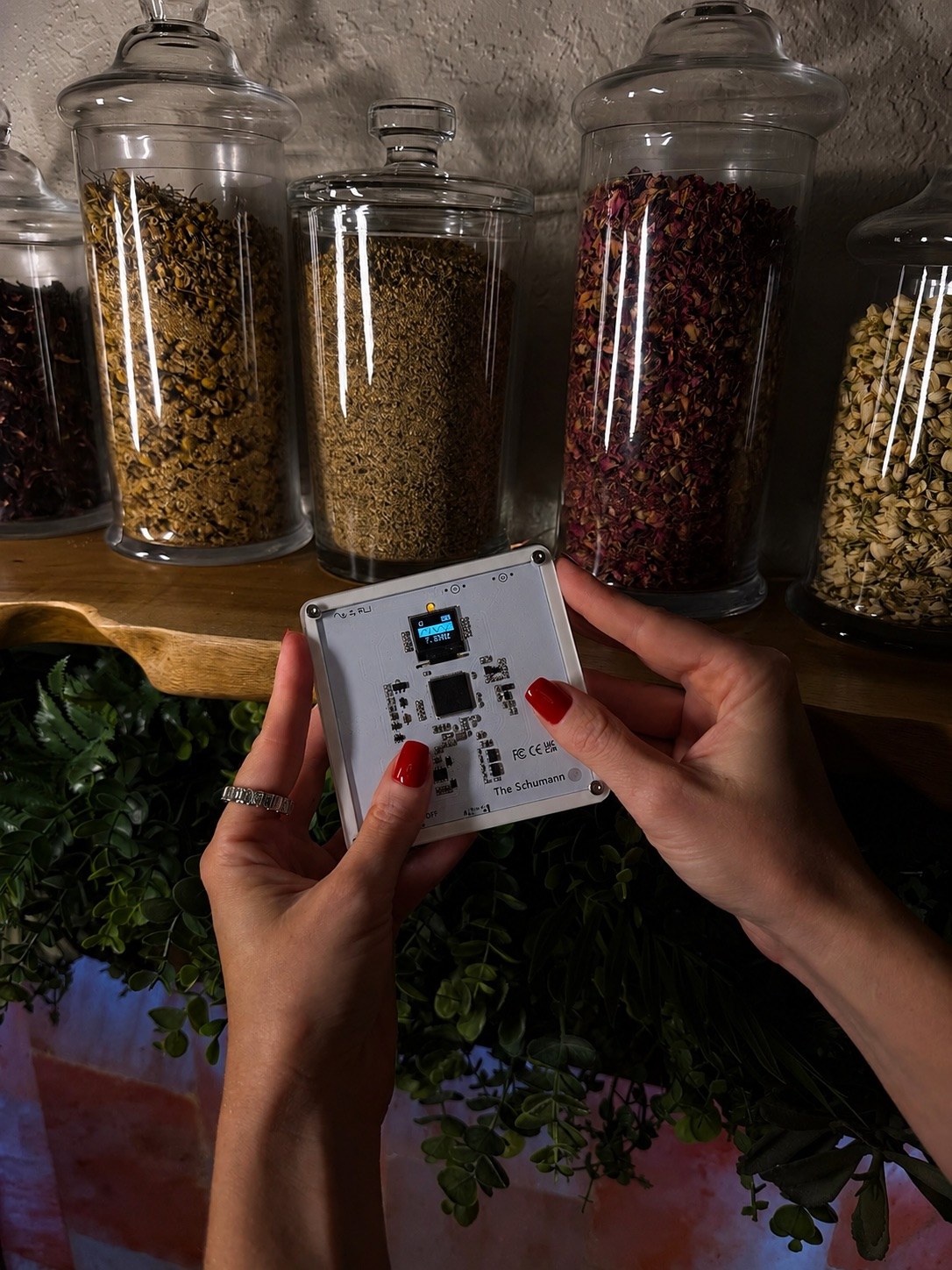
The Root chakra sits at the base of the spine and rules the most foundational feelings there are: am I safe, am I steady, am I here. Its element is earth. Its territory reaches down through the legs to the feet — the parts of you that literally make contact with the ground. Now look at what we built: a room named the Root Room, whose signature ritual is a warm herbal foot soak, with the Earth’s own 7.83 Hz frequency resting in your lap. That was not an accident. Before anything else opens up, the body wants to feel grounded — and the fastest route to grounded runs through the feet and the breath. We start you at the root and let the rest follow.
You cannot think your way to calm from the top down. You settle from the ground up — which is exactly where a foot soak meets you.
How frequency and sound connect to the chakras
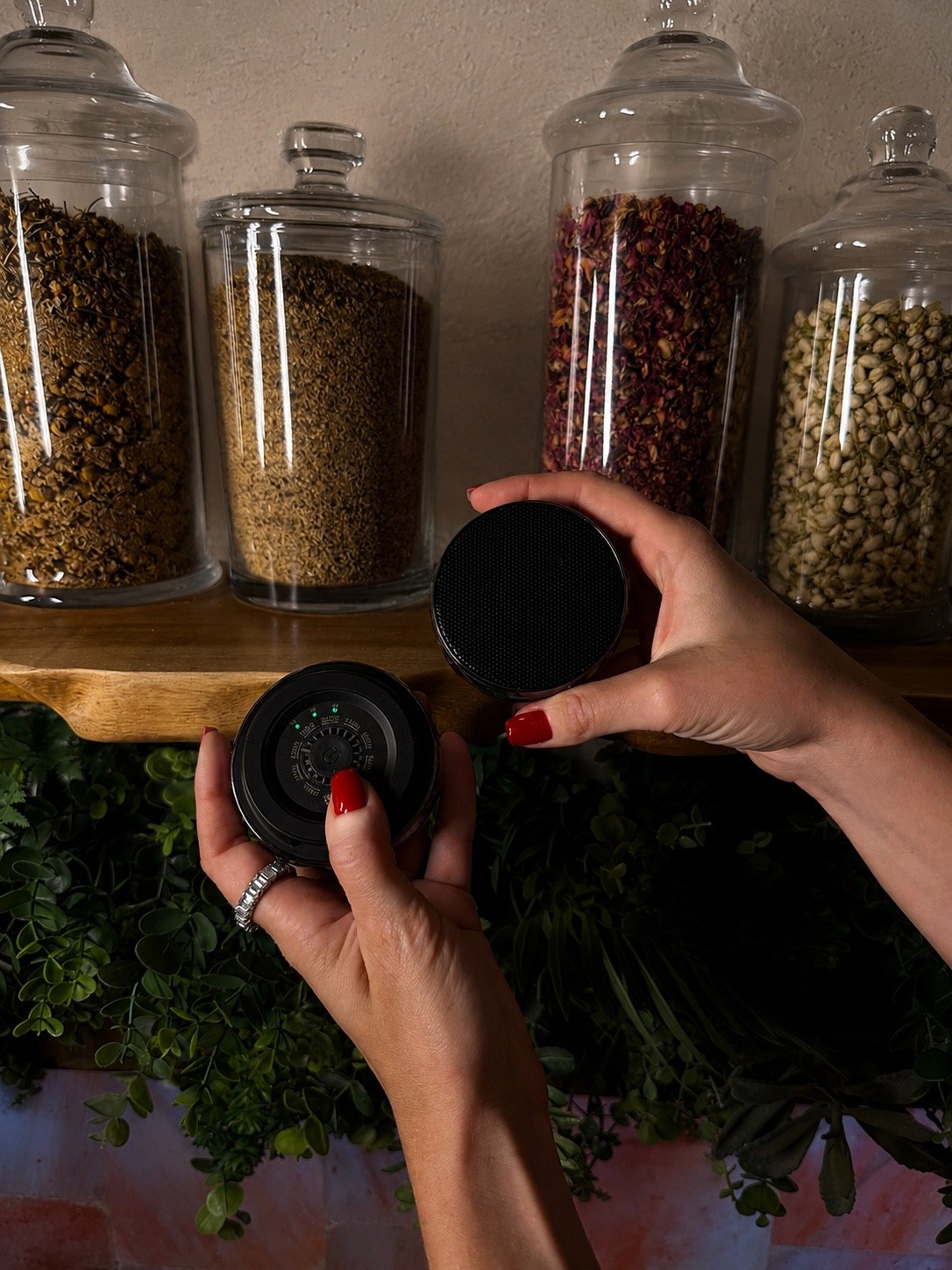
The pairing of a tone to each center is the bridge between this article and the rest of the Root Room’s sound work. In practice it is simple: the Schumann V2 Pro can play the solfeggio tones above, and the sound-bowl instruments fill the room with sustained, overlapping frequencies. The honest truth is that the tone-to-chakra map is tradition and intention, not proven biology — but as a way to focus your attention on one part of yourself for an hour, it works beautifully. Choosing “the heart tone” is a way of saying this is the part of me I’m tending today. That is a real and worthwhile thing to do, whatever the physics.
A gentle way to use the map
You do not need to believe anything to get something out of this. Read back through the seven, and notice which description made you pause — that is usually the one worth sitting with. Then let the room hold it: settle into the soak, let the sound and the light run, and give that one theme your quiet attention for the hour. No performance, no fixing. Just noticing, in a place built to let you.
One honest note
Several of the “imbalance” signs above overlap with real medical symptoms — thyroid issues at the throat, heart or lung trouble at the chest, digestive problems at the solar plexus. Please hear this clearly: a chakra framework is a lens for reflection, not a way to diagnose or treat a physical condition. If you have a genuine symptom, see a licensed professional. The Root Room is a place to rest and reset, and it is happy to sit alongside your real care — never in place of it.
Come settle from the ground up. Book the Root Room → — and if you want the fuller picture of the tools involved, start with the biohacking side of the room.