The short answer
A sound bath is a session where you rest while an instrument — singing bowls, chimes, or a dedicated sound machine — fills the room with long, sustained tones. You do not “do” anything; you receive the sound. Of all the frequency tools, this one has the most research behind it: small studies link a sound-bath session to short-term drops in tension, anxiety, and low mood. It is deep relaxation, not medicine. In the Root Room it plays underneath your foot soak. See the Root Room →
There is no melody to follow and nothing to get right. A sound bath asks one thing of you: lie back and let the sound do the moving.
Singing bowls are old — the metal bowls trace back through the Himalayas and East Asia, where they were struck and rung for meditation and ceremony long before anyone called it a “sound bath.” The modern version keeps the heart of the practice and drops the mysticism you do not want: you settle somewhere comfortable, an instrument sends sustained tones and overtones into the room, and you stay still while the sound washes over and, quite literally, through you. That is the whole thing. Its simplicity is the point.
What actually happens in a sound bath?
You get comfortable — reclined, warm, eyes closed. Then the sound begins and does not stop: a bowl is struck or circled so it rings continuously, tones overlap, and the overtones shimmer against each other. Metal and crystal bowls each have their own character; a dedicated sound machine can layer steady, grounding frequencies underneath. You are not listening for anything — no verse, no chorus, no beat to tap. Because the sound is continuous and unpredictable in a gentle way, your brain quietly gives up trying to predict what comes next, and that letting-go is where the rest begins.
Is there any real science here?
This is the tool we can stand behind most confidently — with honest limits. Small studies of singing-bowl meditation and sound baths have reported reductions in tension, anger, fatigue, anxiety, and depressed mood, along with a greater sense of wellbeing, often after a single session. The likely mechanism is not magic frequencies; it is the plain, powerful relaxation response — slow the input down, and the nervous system shifts out of fight-or-flight and into rest-and-digest. The honest caveat: these studies are small, and “I felt calmer afterward” is not the same as treating a medical condition. So think of a sound bath as a reliable route to deep rest — not a cure for anything.
The magic, if there is any, is boring on paper: sustained sound, nothing to track, and a nervous system finally allowed to stand down.
Why the bowls sound the way they do
A struck bowl does not produce one clean note — it produces a fundamental tone plus a stack of overtones that beat gently against one another, rising and falling as the bowl rings out. There is no rhythm to anticipate and no resolution to wait for. Ordinary music invites your brain to predict; a sustained bowl gives it nothing to predict, so it stops trying. That is the small neurological trick underneath the big feeling of “I lost track of time.”
Sound bath vs. meditation vs. massage
A guided meditation asks you to do something — follow the breath, watch a thought. A massage works on the body through touch. A sound bath sits in between: the work is done to you, through your ears and the vibration in the air, while you stay completely passive. For people who “can’t meditate” because their mind won’t sit still, that passivity is exactly why it lands — there is no task to fail at.
How the Root Room uses sound
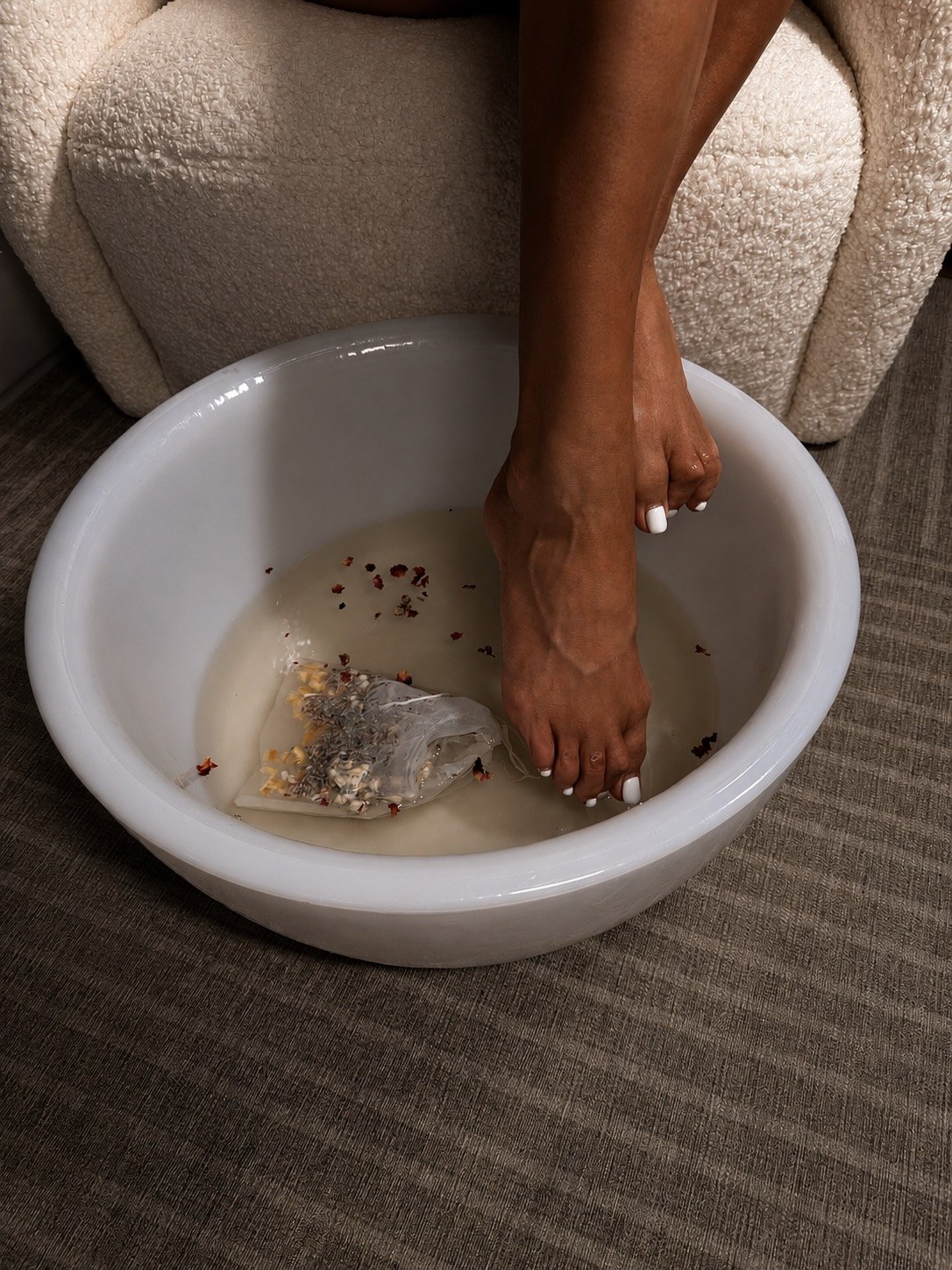
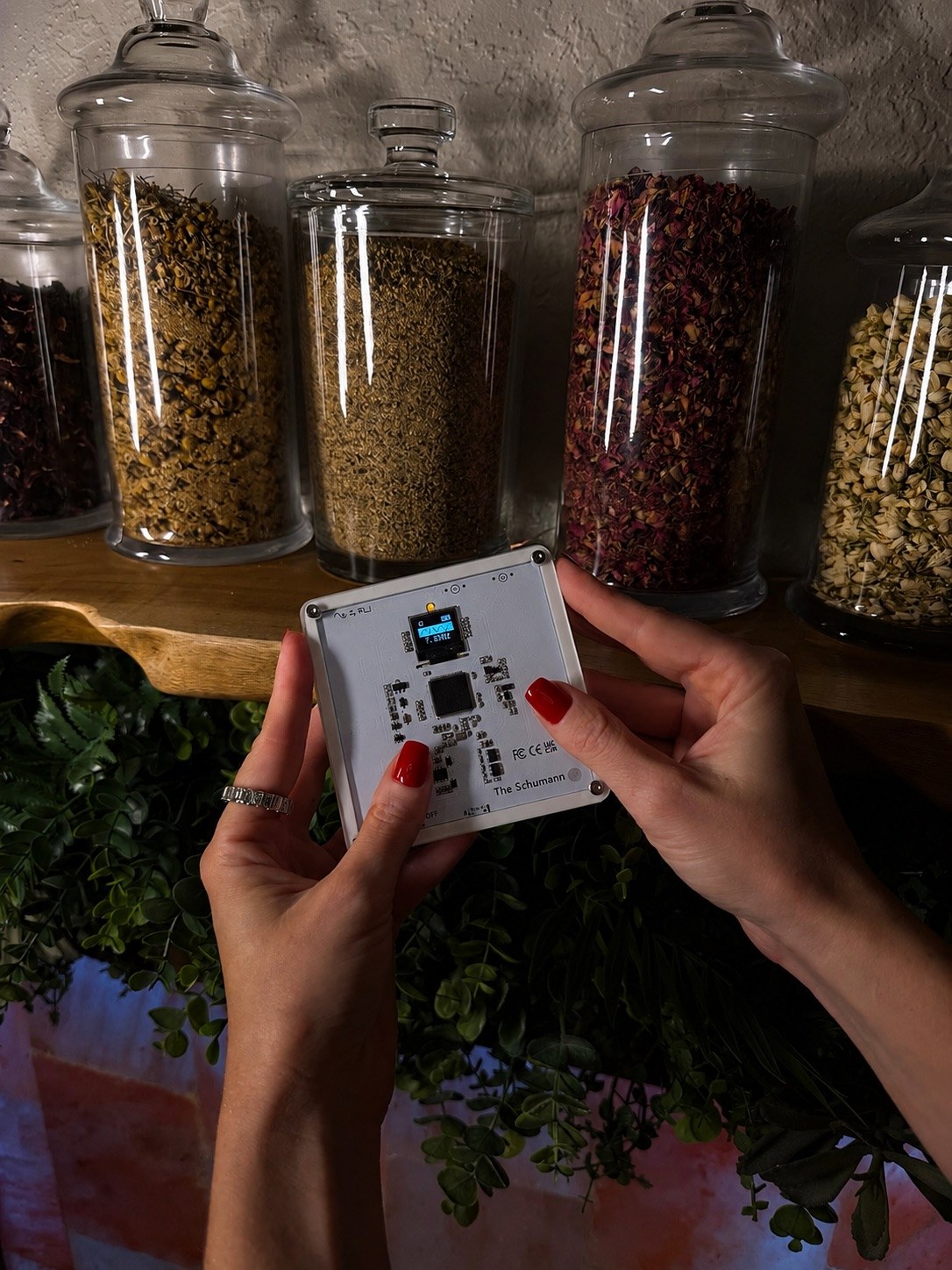
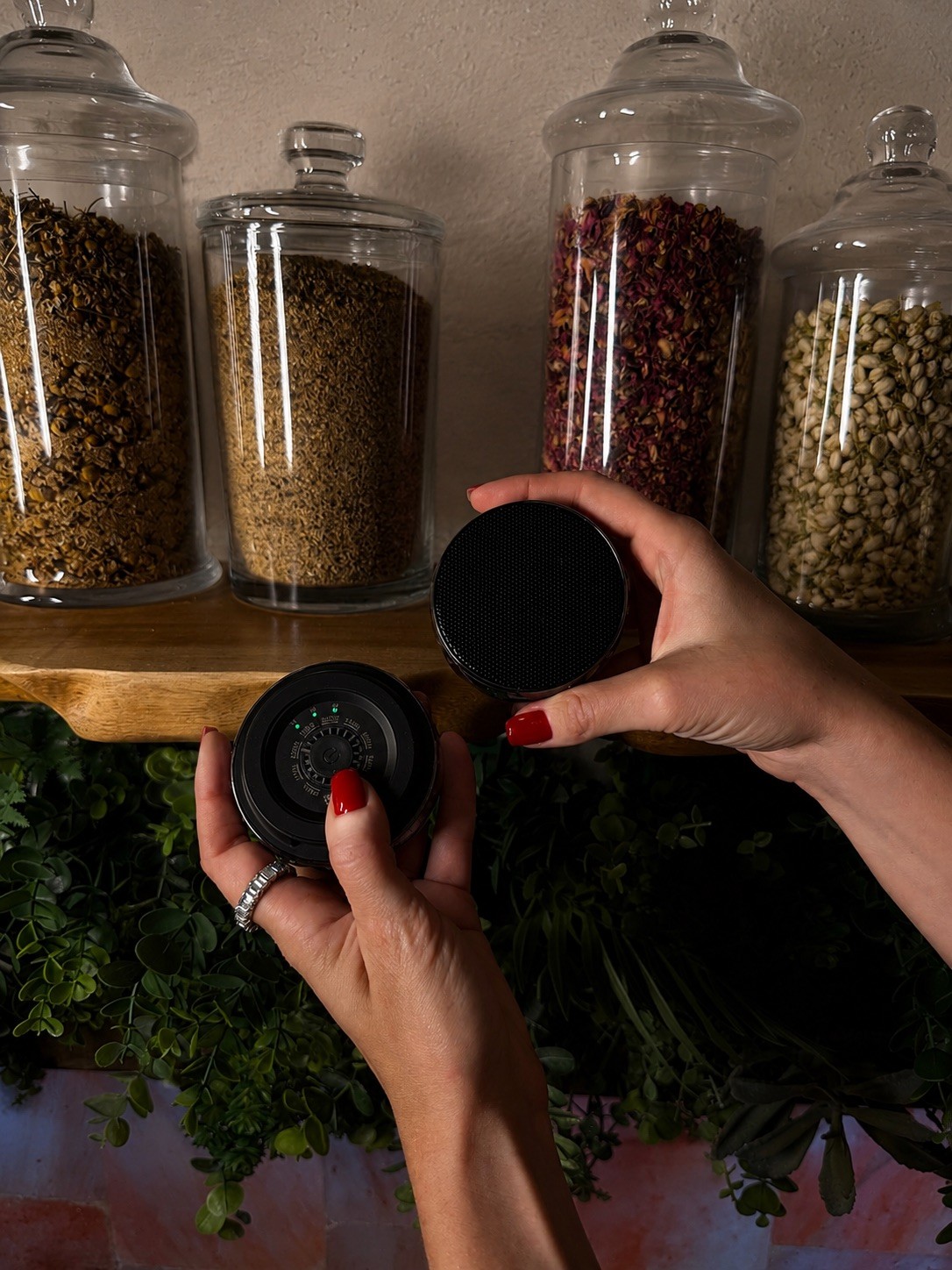
The sound in our suite is not a phone playlist — it comes from instruments in the room: a meditation sound-bowl instrument and a dedicated sound machine, layering singing-bowl tones and steady, grounding frequencies while you soak. It runs alongside the full-body red light and the personal Schumann V2 Pro in your lap, all part of the room’s biohacking layer. You are not booking a stand-alone sound bath — you are getting one folded into a warm foot-soak ritual, which is arguably the most pleasant way to receive it.
A few honest notes before you book
Sound therapy is gentle and safe for most people, but the makers of these instruments — and we — flag a few situations where you should check with us or your doctor first:
- Epilepsy or a seizure history: certain rhythmic sound can be a trigger for some people. Tell us and we will adjust.
- Pacemakers, implanted medical devices, or metal implants: sound-vibration tools list these as a precaution — let us know so we can work around them.
- Pregnancy: we simply keep it gentle and skip intense vibration; mention it at booking.
- Serious mental-health conditions: deep, unstructured relaxation is not right for everyone. If that is you, it is worth a word with your provider first.
- Children: welcome with adult supervision and gentler settings.
- It complements, it does not replace. A sound bath is a wellness experience, not a medical treatment, and not a substitute for professional care.
The best way to understand a sound bath is to stop reading about it and go quiet under one. In the Root Room, it comes with warm water at your feet and a good cup of tea in your hands. Book the Root Room →