The short answer
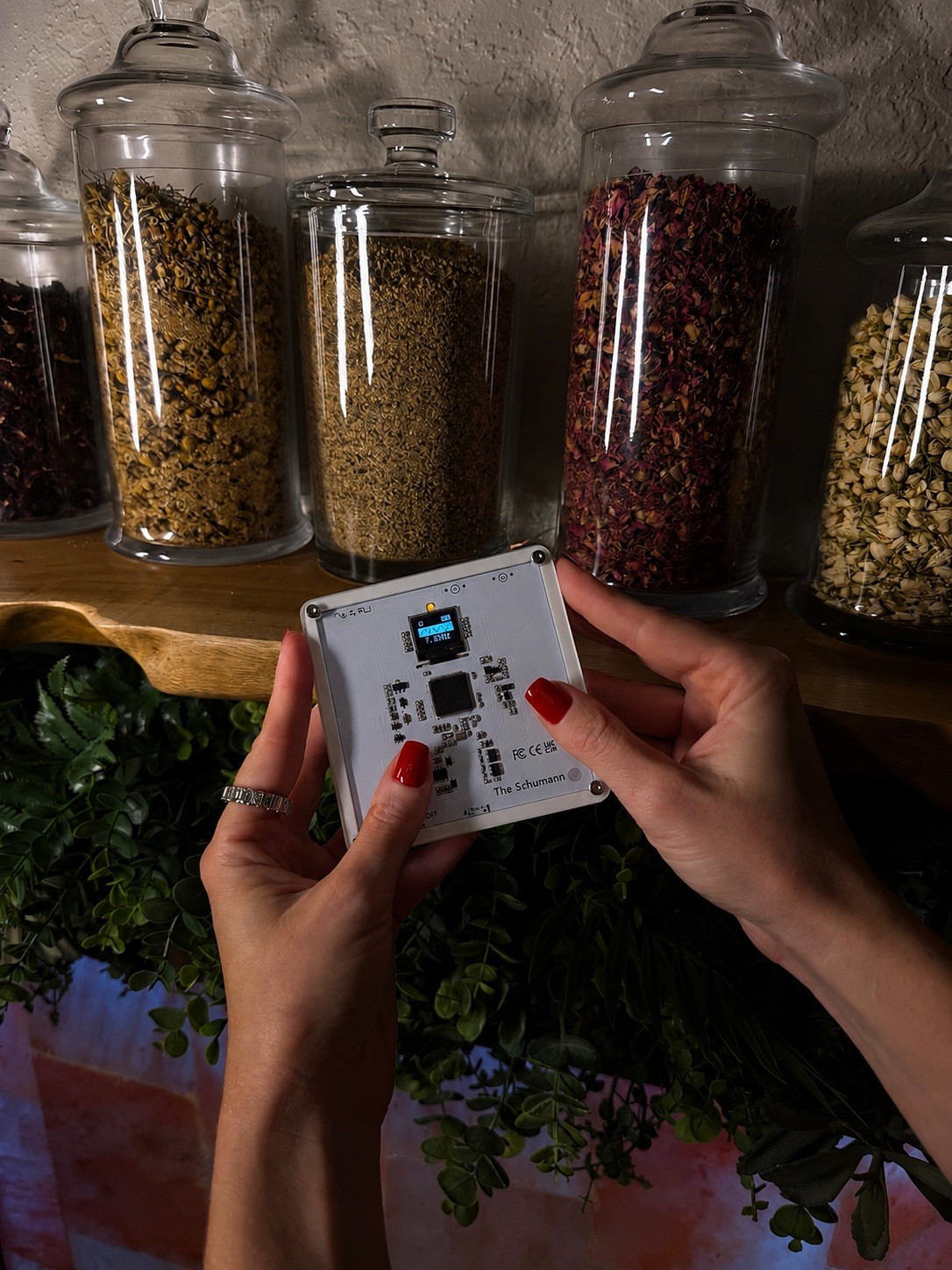
The Schumann resonance is a real, measurable electromagnetic frequency that hums in the gap between the Earth’s surface and the ionosphere. Its main tone is about 7.83 Hz — genuine geophysics, not mysticism. The wellness idea is that spending time “in tune” with it helps you feel grounded and calm; that part is tradition plus a little gentle science, not proven medicine. In the Root Room, a personal device tuned to 7.83 Hz rests in your lap for the whole session. See the Root Room →
People call 7.83 Hz “the Earth’s heartbeat.” The number is real. The poetry around it is where we have to be careful — and honest.
In 1952, the physicist Winfried Otto Schumann worked out something quietly astonishing: the space between the ground and the electrically charged layer of the upper atmosphere — the ionosphere — behaves like an enormous resonant cavity. Lightning strikes it hundreds of times a second, and those strikes make the whole cavity ring at very low frequencies, with a fundamental tone near 7.83 Hz. It is faint, it is planet-wide, and it is measurable — scientific instruments track it every day. That is the Schumann resonance, and everything else in this article rests on separating that solid fact from the wellness ideas built on top of it.
So what is it, exactly?
It is an electromagnetic resonance, not a sound you could ever hear — 7.83 Hz is far below the range of human hearing. Think of the Earth-ionosphere gap as a giant instrument that lightning keeps plucking; 7.83 Hz is its lowest note, with a series of fainter harmonics above it (around 14, 20, and 26 Hz). It has been humming there since long before us. When a device is described as generating “the Schumann resonance,” it means it produces a gentle 7.83 Hz signal meant to echo that planetary rhythm indoors.
Why do people call it the Earth’s heartbeat?
Here is the coincidence that launched a thousand wellness claims: 7.83 Hz sits right at the border between the theta and alpha brainwave ranges — the rhythms your own brain produces when you are calm, drifting, or lightly meditating. That overlap is genuinely striking, and it is the seed of the whole idea: that a frequency matching the brain’s “relaxed” band, and matching the planet we evolved on, might help nudge you toward that state. It is a lovely thought. It is also where fact ends and hypothesis begins.
Does “tuning” to 7.83 Hz do anything for you?
Honestly? The evidence is thin. Your brain really does produce alpha and theta rhythms, and calm states really are associated with them — that much is textbook. But the leap from “the brain has an ~8 Hz rhythm” to “a small device emitting 7.83 Hz will retune you and improve your health” is not something the research has established. Most of what exists is anecdotal or very preliminary. So we will not claim the device heals, cures, or fixes anything.
What we will say is gentler and, we think, more honest: holding a single, steady, low frequency while you sit in a warm, quiet, dim room is a way of giving your attention one calm thing instead of a hundred noisy ones. Even the guide that ships with these devices puts it beautifully — it reminds you that “nothing replaces the real thing” and to step outside and feel the actual earth when you can. We keep that card in the room on purpose.
The frequency is real. Whether a gadget can hand it to you is the open question — so we treat it as atmosphere, not medicine.
How we use it in the Root Room
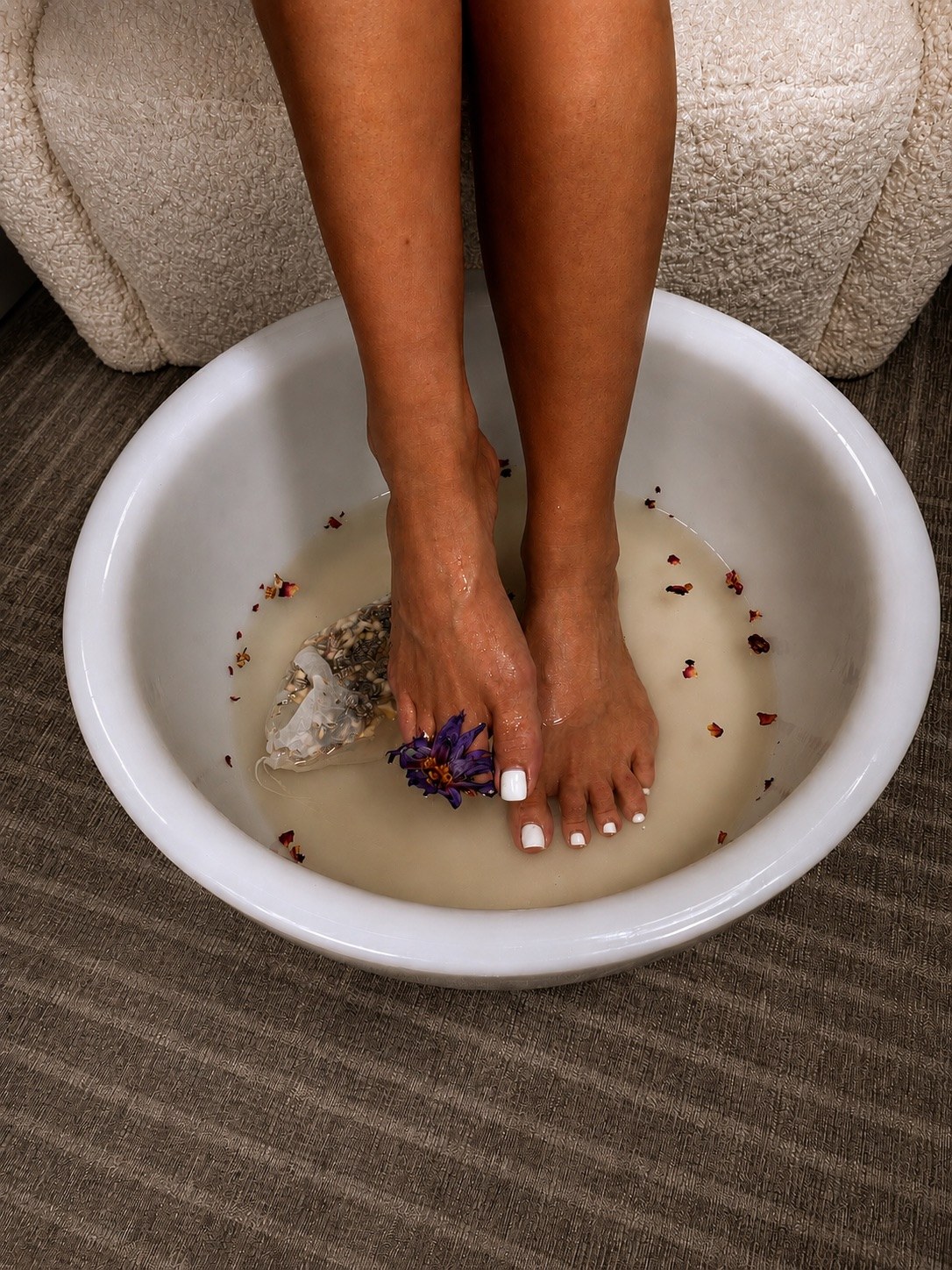
Each of the two chairs has its own Schumann V2 Pro — a personal resonance device that simply rests in your lap for the full session, tuned to 7.83 Hz. There is nothing to operate and nothing to feel obligated to notice — it is one more quiet layer, alongside the full-body red light and the live sound instruments, in a room designed to let your nervous system stop bracing. It is the smallest device in the room and, in a way, the most poetic: you are holding the Earth’s own frequency while your feet soak in warm, herb-steeped water. For the full picture of how the pieces fit together, read the biohacking side of the Root Room.
The frequency “menu” — and how to read it
These devices can run far more than 7.83 Hz. Their cards list dozens of frequencies grouped into families — brainwave bands, “solfeggio” tones, planetary tones, and more — each labeled with a purpose. Here is how to read that list without being misled:
- Brainwave bands are real categories. Delta (deep sleep), theta (drowsy, meditative), alpha (calm, awake), beta (focused, alert), and gamma are genuine ranges seen on an EEG. Choosing a “theta” setting at night is a reasonable way to set an intention to wind down — just know the device is not measuring or steering your brain.
- Solfeggio and planetary tones are tradition. The idea that 528 Hz is the “love” frequency, or that a Jupiter tone brings prosperity, is modern folklore layered on older ideas — meaningful as ritual and focus, not established as biology.
- Use them the way you would incense or a candle: to mark a mood and point your attention, not as a dose. That framing keeps the experience honest and, we think, more enjoyable.
Is it safe? A couple of honest notes
For most people, yes — it is a low-power personal device you simply hold. But if you have a pacemaker, an implanted medical device, or metal implants, or a seizure history, or you are pregnant, tell us at booking and we will leave the device out or adjust your session. And the usual honest line applies: this is atmosphere and wellness, not medical care, and never a reason to skip a doctor. The same fine print lives on the Root Room page.
Come hold the Earth’s frequency for an hour, feet in warm water, and decide for yourself how it feels. Book the Root Room →